
Perspectives & Insights
Matrix-M® Safety Data: An Interview with Jonathan Fix

Expert Review of Vaccines recently published a comprehensive review of reactogenicity and safety data from 66 clinical trials and post-marketing studies of vaccines (Nuvaxovid™, seasonal influenza, combination COVID-19-influenza [CIC] and R21/Matrix-M malaria vaccines) containing Novavax’s Matrix-M® adjuvant. In this interview, Jonathan Fix, Associate Director, Research Strategy and Analytics at Novavax, explains why the review was conducted, the safety and tolerability findings, and what this means for future vaccine development and partnerships.
What was the purpose of this review of Matrix-M?
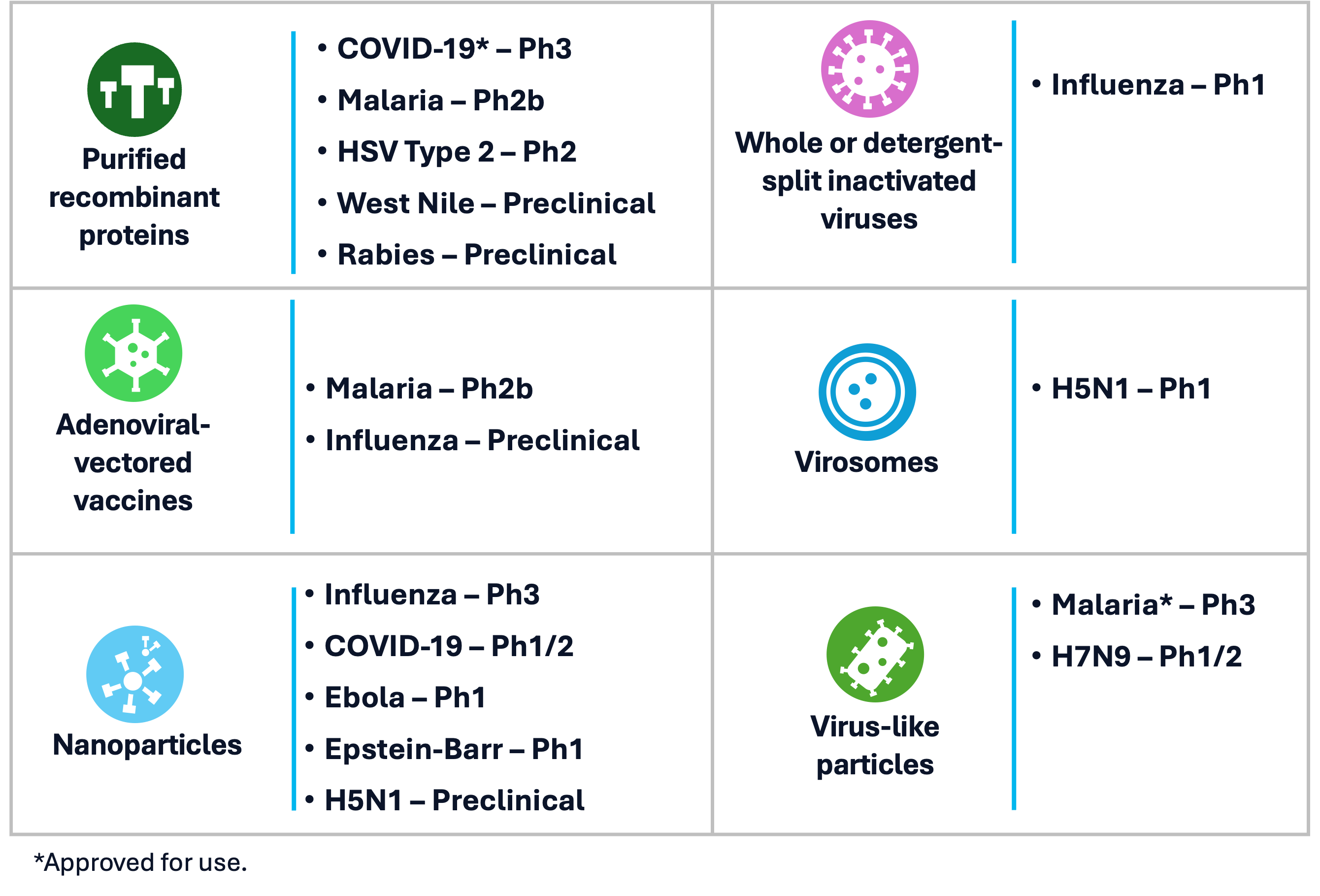
The continuous assessment of vaccine safety is critical to protecting public health and reinforcing confidence in the vaccines people are receiving. With this in mind, we undertook this effort to comprehensively summarize the vast amount of data with respect to Matrix-M’s safety and tolerability profile when added to vaccines. Matrix-M has been used in a number of vaccine candidates across infectious diseases and vaccine platforms, two of which (Nuvaxovid for COVID-19 and R21/Matrix-M for malaria) are authorized for use around the world.
What did the review show about the safety profile of Matrix-M containing vaccines?
Overall, the safety data support a positive benefit–risk profile of Matrix-M-adjuvanted vaccines, which were well tolerated across diverse populations (e.g., children, older adults, immunocompromised individuals) and geographies. Over 64,000 clinical trial participants have received one or more doses of a Matrix-M–adjuvanted vaccine (totaling approximately 143,170 doses) and more than 10 million children and adults have received one of our marketed products. Injection site and systemic adverse events have been consistently described as predominantly mild-to-moderate in severity and self-limiting. In both clinical trials and real-world studies, we observed that Matrix-M-adjuvanted vaccines generally demonstrated lower rates of reactogenicity when compared to licensed vaccines for the same conditions.
Why is the safety profile of a vaccine so important?
First and foremost, we want to prevent disease or reduce disease impact without doing harm. But to take it a step further, the simple answer is that safety and tolerability are critically important because people want to be confident that a vaccine is safe before putting it into their body and they don’t want side effects to cause them to miss work, school or spending quality time with friends and family. The most effective vaccines cannot prevent disease if people are unwilling to use them. So, we continue to evaluate safety and tolerability through carefully designed studies even after a vaccine is approved for use.
Ensuring confidence in vaccine safety, which may increase general willingness to vaccinate, has another important consequence: indirect benefits. Some members of our communities are either unable to receive a vaccine (contraindicated) or have weakened immune systems (due to factors such as chronic illness or age) and mount lower immune responses. Therefore, achieving and maintaining high vaccination rates not only provides direct protection to those who are vaccinated, but also produces some level of indirect (or herd) protection to those in our communities who are either unable to be vaccinated or don’t respond as well to the vaccine.
To ensure maximal vaccination rates among the general population, it is important that we continue to identify effective vaccines with good reactogenicity and safety profiles.
What do you think contributes to Matrix’s safety profile?
Our Matrix-M adjuvant was developed with the aim of promoting strong antibody responses and a “balanced” T-cell response. The thoughtful combination of Matrix-M’s components (Matrix-A and Matrix-C), formulated with cholesterol and phospholipids, produces an efficient and targeted adjuvant effect, in what we often describe as a “quick on, quick off” fashion. This is achieved through rapid transport of Matrix-M adjuvant to the draining lymph nodes (parts of the body that generate an immune response). This fast clearance from the injection site and focusing to the draining lymph nodes means that we tend to see a shorter period of reactogenicity without an excessive inflammatory response, leading to fewer side effects.
What do these findings mean for partners evaluating Matrix-M?
The research analyzed in this publication should instill confidence in the potential for Matrix-M to enhance partner vaccines, whether already licensed or candidates in development, without compromising safety. Novavax’s adjuvant has proven its utility across platforms, ages, geographies and disease areas, supporting its potential for future clinical development while safeguarding the benefit/risk profile.
It’s important to keep in mind that we only looked at published research that presented safety data, and that the global body of research on Matrix-M is not fully represented in this analysis. There are numerous studies underway or that have been completed and are yet to be published, spanning vaccine platforms, disease areas, antigens and companies conducting the research. Much of that work that is public information is featured in the manuscript’s supplemental material. We expect this impressive body of evidence to continue to grow and support the potential of our Matrix adjuvant.